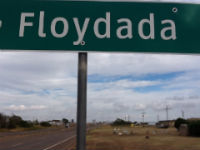
Floydiana is a serial book, not a blog. Chapter by chapter it explores life in Floyd, a town and county in Southern Virginia. The area’s mixture of people is as unlikely as its scenery is “Look at That!”
This resident of Floyd County began his life near the Gulf of Mexico, and actually in Mexico—Veracruz.
On the map, Veracruz is located directly east of Mexico City. Its longitude 90 runs north just to the east of Dallas, a city about 700 miles east of the Arizona border–for Anónimo, a perversion of Ellis Island.

At thirty-six years old Anónimo cannot be named or photographed because he is an undocumented immigrant, so he will not appear in McClure’s Portrait of Floyd. He enjoys no precious citizenship, not even a visa. A figurative wall stands between him and a full life.
We met for an interview on September 28, 2017, somewhere away from his home. [Square brackets enclose written answers to written questions submitted soon after the face-to-face interview.] I told him that for Floydiana he had to represent every Hispanic in the county. Although we laughed, details of his life had to be pared down so much to prevent identification, that he ended seeming like the Basic Undocumented. A sort of non-person, just a number on his W-7 form.
As a boy he went to school the whole time. In the early 1980s there wasn’t much technology to entertain children, so he played baseball and soccer, rambled in the fields. His parents had a farm that grew corn, beans, and sugar cane. Of their three sons, one stayed home, one lives in Texas, and the other lives here.
Why did he come to the States? “I finished high school but had no money. Thought I would come over here and work, earn money, return for college. Wanted to be a schoolteacher.” How did he come here? “I knew some people who were living in Virginia. Walked through the desert of Arizona and met someone who drove us here. [We walked for two nights. It was hard and I was sent back but I try again and made it the second time. I know people that spend a week walking in the desert. Many people die on the journey. If it was a legal path to come and work on this country we would not risk our lives to cross the border illegally.”]
“I came here with no money. Only spoke Spanish. I learned English pretty quick—am always willing to talk with people. No wife or children. [“I’d say the ratio of men to women is about 60/40. It is easier for a man to migrate to another country.”] But I’ve been here for seventeen-eighteen years and know a lot of people in this county. I have always felt welcome.”
[Yes! He and others send money back to Mexico. “One of the reasons I decide not to go back as planned—because I knew I can help my younger siblings and parents if I stay here.”] He finally saw his mother here after sixteen years—it took her that long to get the visa.
“Most people don’t know the immigration situation. ‘Why don’t they get visas and come here legally?’ You can apply, but you can’t get the visa. You’ll stay and work. But most people I know want to return. People cross the border and risk their lives—basically there is no way to come here legally. If you work, The U.S. Government issues a number that allows and requires you to pay taxes”–i.e., Application for IRS Individual Taxpayer Identification Number.
“In 2001, I got my driver’s license—back then you didn’t need a social security number. (Some people make up a fake one.) I pay social security, federal taxes, state taxes. Will never get the money back. ‘The way they paint the Latino community as criminals—the people I know are just working.” Most of the Latinos are law-abiding. Some get into trouble for drinking and driving or another crime.
He goes to church, teaches Sunday school, even preaches. Where? At a Hispanic ministry in another county that draws maybe sixty people. But recently things have changed. “For example there’s a lady over there in Galax, as pastor—she’s from Costa Rica. She was speaking Spanish with her son at Wal-Mart. A man came out: ‘You have to speak English! You’re not in your country.’”
[“I would like to said that I love this country and I am so grateful to its people. I work hard everyday and enjoy been here. I try every day to be a good member of this country society and I dream that one day I can have legal status that allows me to contribute more to this country where I have live for half of my life.”]
17. From Here III: Virginia (“Pat”) Price: “I Tried to Meet the Needs of Others”
admin : September 27, 2017 7:58 pm : Floydiana PostsWells met Ms. Price across the street from her house at Mt. Zion Christian Church. He had recently attended a Rainbow Tea service there, an inter-church, interracial benefit for a new roof; a number of white people wanted to counteract a demonstration by pseudo-Confederates at the Courthouse. As one of the speakers, Ms. Price explored the significance of the color green in the Bible. Afterward she and Wells were introduced by a mutual friend, Kamala Bauers, who recommended Pat as an interviewee. She graciously assented. Her follow-up notes appear in square brackets.
On September. 20, 2017, Wells arrived at her home, 357 New Town Rd., Floyd (just outside the town limits).
Ms. Price seemed to be having slightly mixed feelings about the neighbors’ habit of calling on her for help. One, for example, had telephoned about a burn, “And I said ‘put water on it.’” [“I felt good about helping, as she has a daughter who was a doctor and could have called her.”] Alert and spunky, especially for someone born in back in 1934, she started answering questions about her childhood.
Her parents were Hunter Otis (“Pete”) Beaver and Frances Louise (“Nancy) Beaver. Delivered at home by Dr. Jabez Mastin Harman (d. 1942), she grew up about a mile from the former El Tenador roller-skating rink on Rt. 221 next to the Little River (now Phoenix Hardwoods). “There were sections of Blacks in the county: Indian Valley, Floyd, Copper Hill.”
What kind of work did the people do? “Whatever they could find. Timbered, farmed. Black people could hardly find a job. We weren’t offered the job—you had to find it.” Her father worked for the WPA when he could. [The Works Progress Administration, later Work Progress Administration, ran from 1935-43.] He died at forty-six. “We grew up learnin’ how to live—do what we had so we could live.” Her mother was a “worker”—she could find a job as a housekeeper. Her father was more of a homemaker—he watched children, did the cooking.
“What transportation!? The only thing we had was walkin’. Segregation time. We didn’t have the opportunities we have now. Walked to 221 to catch the school bus–for black people. The white children were riding in their bus, and they would pass us and yell “Nigger! Nigger! Nigger!” She attended Harris Hart school; one burned down and they built the one that became the school board offices in the New Town section (145 Harris Hart Rd. NE).
In the meantime she went to school at Pizarro, located between Little River and Franklin Pike. As for weather, “As long as that bus could go 221,we were expected to be in school.”
“’Kindergarten!’ Didn’t have kindergarten. School was just like a family because everybody knew everybody. Walker Campbell served as principal, bus driver, cook, counselor, teacher—he tried to fill in all of our needs. He would talk over problems with us. He would stop teaching if we were interested in something related, and we would discuss it.” Students learned a lot from these digressions. Campbell was involved in everything civic and was spokesman for blacks. He is named at the left in this photograph of the Teacher’s Register:
“During World War II. I was afraid when the planes came over. We would pick silkweed for parachutes. My mother had one child, but my daddy had three. Of the two half-brothers, one went into the army during Korean War.”
She has three children. The oldest is Deronda, the middle is Clinton (who lives with her), and the youngest is Richard, who lives in Blacksburg. Although her daughter, who lives down the street, belongs to a church in Roanoke, Pat belongs to Little River Baptist. “God didn’t tell me I had to go to the Nazarene church, or Baptist, Methodist…. He didn’t say I had to go to any of them. The Bible says ‘Upon this rock my church is built.’ I am my rock. As long as I have Christ in me, I have a church.” [“Not that I don’t believe in churches–it’s the fact that I believe the church is for us to congregate with one another. It’s not the name of churches but I believe that I stand on my rock as my church. It means, I am a small stone that is part or the superstructure of the church and will be judged by my deeds and not a structure or denomination.”]
She met Kamala Bauers [“when I was visiting a friend in the hospital. They knew about Kamala’s accident and asked me to go to her room and visit her.”] Kamala’s three-year-old was later enrolled in Head Start. “I think of her Ananda as being mine. Kept photos of her children on my refrigerator.” At the time, Kamala lived at Dobbins Hollow in the Red Oak Grove vicinity.*
For thirteen years she cooked at El Tenador, where there was a restaurant separate from the rink [across Hwy. 221 on the corner—a gas station with a small grill owned by Mr. and Mrs. Lynwood Gearhart (?]) “I helped to raise the owners’ children, done the cooking ‘n the cleaning. They were nice people. The lady who owned it first, while I was going to school, I lived with them, took care of the children, and they gave me $2 a week [besides room and board].” That was in 1952, when Pat graduated from Harris Hart, 11th grade.
Virginia worked with Head Start for thirty-two years, 1966-98. “I used to drive the bus down to Traviana [Community] to pick up the [Ruth] Bason children.” [See Chapter 36, Jack Wall.] First the center was located in the former school building that would become School House Fabrics. Then it moved to the former clinic on Floyd Highway S. (later the headquarters for Community Action). “I started out as a teacher’s aide. Then teacher. Case Manager. Then Center Director.” The best thing that happened to her at work:
We had to be interviewed to get the job. I had no college education. But they told me I had the mother wit. I was up against two college graduates. “What can you do for us?” “I have a mouth and I like to talk.”
She loved the work. “If I could go back, that’s exactly what I’d like to do.” An example of her aptitude: “I had one little boy in Head Start. He would turn a table over—nobody seemed to handle him. [Calmly:] ‘When you can turn that table back, you can go outdoors.’” But the greatest feeling of accomplishment was helping a half-blind girl. “Couldn’t use the bathroom. I taught her, also how to feed herself and how to walk. If you have the feeling for what you are doing, you can meet the needs.”
“I had a grandmother who had Parkinson’s, so we had to help her in every way. I tried to meet the needs of others.” Once a week she now helps someone with the same disease. ”I see things in this person that others don’t notice.”
She and her husband Clinton were together for twenty-three years. He was a Jehovah’s Witness.
I went to his church but he didn’t go to mine. I went with him so we could be together as a family. In 1977 he got sick—we thought it was the flu. By the time we got back home, doctors called and put him in the hospital. He died of kidney cancer in 1978. He left me with three little ones. I have a son who has been a diabetic since he was twenty-two months old. I had to learn to give the baby shots. Several times I thought he had died. But he will be forty-nine years old and is doing well.
The framed photo of white boys on the wall? “Clinton married a white woman with two kids. Although they divorced after thirteen years, he goes over there and she calls every day. The boys put Clinton’s name down as their father at graduation and he feels like their dad. ‘I raised them, didn’t I?’”
Virginia worked for Kamala for fifteen years, at first as a backup worker for Wall Residences. She helped with the day program for about ten people, mostly males. Kamala asked if I would work for one of their clients, and she did for fifteen years. “Jamie was with me. When I first got the modular house—“’Which room do you want?’ He chose one.”
Randall: “Maybe you’ll take care of me when I get too old.” Pat: “I’ll be glad to.”
She wanted to be a nurse or a musician, and did sing and play the guitar for a while for a church group. “I feel that in taking care of…..I have met that dream.”
At Head Start she encountered a problem:
I was applying for a position. The head wrote the main office in Philadelphia or wherever. He wrote that the position had been filled. Maybe a racist. I wrote the EOC. A man called: “Ms. Price, how do you like your job?” “I’m not working.” “But they told me they had hired someone. I’ll call you.” He hung up. He did: “Report to work the next day.” The boss wouldn’t speak to me. Didn’t bother me. I won.
A recurrent negative memory:
My mother worked at Blue Ridge Cafe. We’d walk to the back, order our food, then take it outdoors and eat it. Look at the flies. Brings back memories: you see your mother cookin’ the food, your aunt cookin’ the food, and I’d order a hot dog and have to go outside and eat it. The others were just—like me. Trying to get by.”
“When we were growing up, we didn’t have yearbooks, just a diploma. Recently we had our Harris Hart reunion [for children who attended the school before integration]. Only three classes to graduate. It wasn’t meant to be all black but these were the only people.
Ms. Price declared her intention to paint the ceiling of her home. Randall, solicitous: “You won’t get up on a ladder.” Ms. Price: “Who!?” But she did agree to think it over.
A fond memory of neighbors:
A white lady gave me a nickname, “Patty Dean.” Dropped to “Pat.” When you lived in the country…. This neighbor, Gypsy Strickler, would yell to my grandfather and that sound would come up the holler: “George!” [Pat imitates the shrill call.] He was a farmer. She was as nice as she could be. They didn’t treat us as [merely] black people. Her sons used to come to our house and go to bed, eat. Another family was the Sowers; when they moved, we moved. Jim would say, “If you go, we go.” My mother worked for them. They took us in as a family–Jim and Dorothy Sowers.
As the interviewer departed, Ms. Price was about to help a neighbor who had to use a walker to get around. And when Wells paid a second visit to clarify a few things in the interview, another neighbor knocked on the door and wondered if Pat would provide transportation somewhere.
* Note from Kamala:
I met Pat in 1985, when I was hit by a drunk driver and she came to visit me because I was from Floyd. She says I was smiling and trying to make others feel better, even though I was in very bad shape. In any case, a few years later, I interviewed for a job at Head Start with Pat, and she hired me. I, also, was up against people with degrees had no formal training. Ananda was about eighteen months old. I would not be where I am today without Pat’s help. Years later I was privileged to be able to repay the favor of employment. She is a special woman.
In 2010 the Floyd Story Center interviewed an African American World War II sailor, William C. Hayden (b. 1925), a neighbor of Ms. Price. www.floydstorycenter.blogspot.com .
Perhaps it was a February night when I found my way to Chateau Morrisette. Having a little difficulty with coordination, I pried the heavy, castle-like door open to the scene of a crowd equally happy and noisy. I looked around for Jeff–but that’s right, our meeting in the Loft had already taken place.
“It’s for my retiuhment,” exclaimed a gentleman as he set down his black leather bag and extended his hand.
“Doc!” I noted the familiar sport coat of brown tweed, the woolen vest, the striped shirt and collar. I asked “How are the Goruslawski twins over in Polish Town?”
“No failiuh to thrive,” he chuckled, “after a hundred and fifteen yeahs.”
I looked over his shoulder at a long table held a large group of sunburned men who punctuated their high spirits with an occasional obscenity. “Golfers,” I said to myself. With a little fumbling I hoisted the ol’ ‘Spex into an eye-socket, then made out the words on a few of their caps: “Myrtle Beach.” Then I panned the instrument to a table near them where a businesslike woman sat typing, unperturbed by the disorder, and read her name plate: “Miss Keith.”
A basket of rolls dared me to steal one. Now out of the corner of my eye I glimpsed a gent who wore a uniform as gray as his skin; he held a rifle upright in one hand and a canteen in the other as he sipped under a mustache. I was trying to remember where I had seen him when Doc Gibbs passed in front of me to apply his stethoscope to the chest of an attractive woman; she wore a black veil and bright pink earrings that matched the rounded top of her black-brimmed hat.
“Steady,” said a nearby man, who reached out his arm. I say “arm” because he had only one, same as the farmer next to him. They were drinking what I assumed was white wine from Mason jars. “Thanks,” I murmured. Next to them was a table with no chairs, and atop it–a coiled rope? No, by God, a viper! Sitting atop coils, it curved its head downward into a glass of wine–a fanged straw. I stuck out my own tongue but the animal shot a look that cause me to hustle backwards.
“Excuse me,” I said, turning to find my chin only inches from kiss-me lipstick. Hearing my own intake of breath, I prayed for a warm exhalation from deep-red lips. But nothing seemed to escape the net that hung from a large-turned-up-brim hat, which raked over the woman’s right eye. Her left one stared darkly ahead. “Blink?” I offered. No response, so I tried “Pink”–as I admired her earrings and the rounded top of her chapeau. No motion or sound, let alone a transfer of pigment, so I was relieved to hear a female voice from somewhere in the room.
Singing, it had a lilt that drew my gaze toward the massive stone fireplace. Her chair took up a corner so that her great, folded wings could press against two walls. From the chair hung a pair of goggles. Her boots could be glimpsed under the table, which I soon reached. Her eyes lit up as she recognized me. As I bent over to hug her, I almost dropped a few tears of relief at her safety. “Unfaith! Welcome back to Floyd County!”
“My dear Randall, how often I remember your kind rescue–followed by your hospitality! And our Sunday morning colloquy!”
“I guess if you can drop onto my deck you can do the same into my next book.”
Smiling, she reached up to clasp my neck, then removed a glove, extended an index finger, and brushed my lower lip affectionately. “Cookie?”
“No thanks, already had a big one.”
“So I see. ‘What if I eat one of these cakes?’ thought Alice.'” I was happy that she could maintain her erudition while shedding a few pounds for safety. And she was enjoying a bottle of wine with a hearty-looking gentleman. “Randall, are you acquainted with Mr. Biv?”
“Roy!” He and I smiled over the wine glasses. “Believe it or not, Unfaith,” I said with a some enthusiasm, “he inaugurated an earlier chapter of Floydiana.” As this personage stood, I had to tilt my head back a little to see his eyes above an orange beard-and-mustache and ruddy cheeks. The right iris was blue and the left hazel. (I remembered calling this anomaly by the wrong word. “‘Condition‘!?” he had repeated, with a voluble, good-natured scoff, “It’s a commission!”)
“Unfaith,” he explained, “was just singing about Night–song by Strauss–‘Nicht that ‘Nimmeth’–”
“‘Nimmt das Silber weg des Stroms,'” she recited. ”’Takes the silver from the streams.'”
I supposed that it couldn’t take the golden gleam from Roy’s tooth. “Randall,” he confided, “I feel blah when sunshine drains away. A sort of anemia. Need that refraction!” He opened both hands backward toward his outfit: “Voilà! Today it’s a letter-P theme.” His voice boomed as he motioned from scarf to sweater to pants to socks to shoes: “Pumpkin…. Puce…. Platinum…. Periwinkle…. Palatinate-purple.” I was grateful for the dim light. I also worried about Unfaith: remembering her story about trying to navigate through fog, I wondered how she could fly in the dark tonight. Maybe Roy would take his fellow daylight-dependent under a wing of his own.
“Is this,” I asked myself, “a different kind of stoney reality?” Now why were people were staring at me. Can’t someone proclaim “Ontogeny recapitulates philanthropy”? That voice nearby–isn’t he speaking Arabic?” I avoided turning around lest it be Cide Hamete Benengeli himself.
“Randall,” asked Roy warmly, “are you with us?”
“Sorry.”
‘I’d like to introduce you to my friend.” He turned to someone who was slight of build and, well, indeterminate of gender. Exotic dark skin and eyes gained did little to offset black clothing: a tailored jacket, hip-length with a mandarin collar; puffy trousers; slipper-shoes; and a hat that would be unnoticed in Uttar Pradesh. The outfit was set off by a necklace that sparkled in the nearby orange flickers. “You don’t suppose,” I thought.
“J. Krishnamurti,” declared this personage, smiling over an extended hand. Astonished and honored, I watched eyes widen at the ocular amulet I wore like a necklace. “This must be the fabled HaruSpex! The seer-circle of gems eleven! Very Imposing–no need for Liberace’s fifty-pound rhinestone!” We chuckled. As to the speaker’s sex, no help came from an amiable “Call me ‘J'”–nor the letter air-drawn, backward as a courtesy. The person’s accent was also a challenge, as was the vocabulary, so I just nodded at vatic and valorization. Yet we conversed at length, spiritedly, encouraged by wine, wood-flames, and laughter.
“I’ve always admired your counsel,” I said: “Observation without evacua–”
“Evaluation,” came the reminder.
“Sorry, that was Chateau Fideau speaking.”
As J’s necklace became an ellipsis of stars, each sparkling at random, I felt somewhat hypnotized. The bottle of Black Dog empty, J had the sudden notion to scribble a line on a napkin and cork it inside. What I presumed was Sanskrit script appeared, moving from right to left. “Is it Jai Isham ishvaram?”
“No.”
“‘Ontology recapitulates philately’?” A shake of the head. “”Hope this pup can paddle'”?
“No, indeed. It’s ‘Miller, be not ground!'” Unable to absorb this information, trying to keep my balance physically and mentally, I followed him outdoors. Into the cold, salty wind we leaned, hugging ourselves. We trudged up the dune, heard the almost invisible smashing of waves against the beach, and flung the blue vessel into the silver-topped, churning surf.
38. From Here VIII: David Allen, Hanatuskee: “I Thought of a School.”
admin : May 31, 2017 2:08 pm : Floydiana Posts
Turning off Rt. 221 onto Cannady School Road SE, I drove downhill and around a curve–and heard my own intake of breath. Pasture grass on the hill ahead leaned intermittently to the right, saltless waves being blown toward shore, as a cloud pulled afternoon sunshine up the slope. I quickly found a roadside weed-patch, pulled off, scrambled, out and took a video (see Chapter 32). In dry calendar terms, it was Friday, May 26, 2017. I then drove almost two curlicue miles to the old Cannady School. On a driveway opposite, a few bumps across a cattle guard led to stretch of graveled ruts that divided the trees and fields for so long that I was afraid I’d run out of County. But there stood the house of David Allen (b. 1946).
Later emailed supplements to the interview appear within [ ].
The gate neatly shut itself by means of a heavy item attached to a rope. David met me on the porch and with his wife Kazuko invited me to sit at the kitchen table. Born and raised in Tokyo, she moved to the future city Arcosanti in Arizona at the age of twenty-six with the dream of becoming a hippie. She started to operate a tutoring center for Math and Reading in North Carolina, 1989, when she needed more income to raise three daughters than she enjoyed as a hand-weaver. At some period she lived in where else but Finland, and in 2012 she landed at Floyd. Here she has helped revive the weaving loom in the Old Church Gallery.
Sitting next to Kazuko’s hand-made loom, I asked David about Hanatuskee. This was a project to teach people the old ways of farming—which he had learned on his parents’ 300+ acre piece of land (more than half a square mile). It included a stretch of the upper Little River, a big white rock, and a good swimming hole. The endeavor lasted from the late 1970s through the early ‘80s and drew many young back-to-the landers, often called hippies, who worked for room and board.

Apex of triangle points north to Cannady Schoolhouse, junction of Cannady School Rd. SA and Thompson Rd. Note bend of Little River.
[How did the name “Hanatuskee” come about?
It was a word my mother found or made up from Native American languages meaning “land of many nuts”—referring to this area—walnuts, hickory nuts, chestnuts, hazel nuts, chinquapins, etc., that were a source of food the Native Americans took advantage of. She came up with the word as a name for members of my father’s herd of pedigreed black Angus cattle he was developing for a while. It never got used for that purpose. I kept the name for our community because I liked it and because it had a nice double meaning applying to both the trees and the people here, me included.]
How did his idea come about? He taught at St. Anne’s-Belfield in Charlottesville (private college-prep). In spring it would sponsor a three-week session for some kind of extramural challenge. One year Outward Bound did something, but the school declined to repeat it. “I had been doing caving and camping with the students,” remembered Dave. So I said “OK, I’ll do something up here.” We stayed in the old school building, hiked, caved in Blacksburg, did orienteering. You would eat a normal breakfast, not eat for twenty-four, stay by yourself for thirty-six, end up building a shelter and spending the night.
Dave sponsored this adventure for four years. “It was successful. Does the kids an enormous amount of good. City kids.” But in 1975 or ’76 he was getting restless at St Anne’s. His family had this abundant acreage where they could even hike off the place onto neighboring property—“something that you can no longer do because of new people. I thought of a school. This place was so nice—put it to good use. A school that was pretty much academic—but you would also work there, raise food on a farm.” He wanted to really educate the students—especially on the subject of domesticated animals. But he had no money, so the vision ended.
As stage two, Dave set it up as a farm with the intention of developing the school later. [The building had been constructed in 1915 as a Presbyterian mission school.–Barbara Triplett.**]
[“The incorporation into a non-profit, tax-exempt entity was a long process involving a couple of different lawyers, and some stopping and going, and I don’t remember a date when it was complete. It was probably around 1979 or ’80.” An article by Trudy Willis in the Roanoke Times, May 27, 1979, declared, “Life on this farm is slow and hard and…but it’s worth it.”] Photo below:
He began to advertise: in Mother Earth News, Farmstead Magazine, and Real Times:
The poster below was sent to acquaintances in colleges and led to the best results:
At first a lot of the students came from St Anne’s. [Most apprentices lived on the top floor, the attic.] People could stay as long as they wanted and leave when they were ready. Some stayed a whole summer. Our shortest record was a couple of hours. A lady came, I showed her around, We were weeding a strawberry patch. ‘What will we do when we finish this?’ she asked. A fellow replied, ‘We will finish this and start over.’ We looked around and she wasn’t there.”
Dave didn’t want them to do drugs, even marijuana, but once a pot plant grew beside the house. He didn’t approve of skinny-dipping in the river, but his principle seemed to be: as long as you don’t cause problems. “We worked hard. I wanted to show them a little bit about how farming was—and still is. I pretty much led by example and expected effort. Most stepped up; a few didn’t.” I confessed that my own farming days had lasted four hours at a CSA. We shared one of our laughs at my pledge: “No matter how grueling the work, I’ll write about it.”
What about the objectives of the farm? Equipment? Jobs? Hanatuskee had mules most of the time. “I got started with one horse, ‘Doc,” but traded him and bought three mules.” Students would mow hay and stack it. The place had a big garden—several acres. It was plowed by mules. Lettuce, squash, beets, carrots. beans (snap), corn, melons…. They took a lot of the produce to the Farmers’ Market in Blacksburg, which was new; also wholesaled some to the Roanoke farmers’ market. At that point the outfit had a truck—a van had been the first vehicle.
The apprentices also raised sorghum cane in a big field, using a tractor-driven cane press. [The process was hard: plant it, thin it, weed it, strip it, cut it, bundle the canes and squeeze the juice out of it. The juice went into a long, shallow pan with a fire built underneath it. In the heat of September, it was not fun to stoke a log fire, stir the pot, and skim off the foam. The job of boiling it down was long.]
Dave’s memories provide more details:
You had to strip leaves off before frost wrecks the stems. Then you cut the stems. I had a cane mill, a set of rollers. One set one crushes the stem, second presses the juice out. The juice is strained through a cloth sack then poured in the pan. I borrowed a tractor to operate the mill (i.e., with its engine). My pan held 80 gallons. It turned out about twelve or more gallons of molasses. The fluid was sort of translucent green from all the plant bits in it; so as it boils, skim that off. Manage the fire and skim. Not bitter like molasses bought in store.
The workers would make another sellable product—if they got the right harvest from Wolf River Apples, owned by Dave’s mother. “When they hit good.” said Dave, “apple butter. Have to use copper kettle—iron makes it black. Need a big round kettle, a big stirrer made at an angle so you can stand outside the smoke. Must stir all the time.”
The farm raised pigs. You tried to arrange it so that all the sows (the farm had four to six depending on the year) have piglets at same time. In a trough the workers cut off the tails and also castrated the male pigs—“a noisy job.” When the animals reached eight months, they were taken to a feeder-pig market (the nearest one in Farmville,VA) to be graded.The dealers sprayed them with marks of different colors to signify quality—silver, blue, red—before the animals were sold in bulk. Then they were raised to 140 pounds or so. “Pigs were the only thing that made money,” recalls Dave. “The dairy didn’t—it was marginal. Inflation was enormous in the early eighties yet the price of milk didn’t go up.”
Trips would be made to Elliston for cow feed at Big Spring Mill, a welcome outing. The milking and feeding had be done every day but Sundays were more relaxed. I remember that there were softball games at Riverflow that were pretty well attended by people at Hanatuskee. People enjoyed trips to the organic store in Roanoke, where they could get stuff in bulk—mainly flour, honey for the cooks. “They tended to eschew sugar but would upend the honey jug into the dough—so their bread tasted like cake.”
Those who could cook would take turns, others would milk cows. Hanatuskee had mechanized, milkers with stanchions, milking machines. The milk was Grade C—for ice cream and cheese. There was a Grade A barn Dave’s father had built, but the cost was too high to upgrade it and get a license.
“One guy built a horse trailer on a car axle. Handy. He was used to pine, but we were doing stuff with old locust posts.” Another detail about wood: “Someone over on the Pike had a building he wanted to get rid of, so he let us tear it down for the materials.” [Despite the heat, the greenhorns had to wear gloves to pull nails from oak boards and then deal with the lumber.] “In winter,” recalls Dave, “we still had to do all the farming. Built fences, five or six pens for pigs, a corn crib. We found out that we could work as long as it was above 20 degrees.” The farm heated by wood, so there was lots of cutting.
The schoolhouse was full, close to thirty. During the winters the number dwindled to pretty much a skeleton crew. “For the most part we had really nice people.” But the most challenging domestic animals walked on two legs. One lady was the cook for a night. Because some apprentices were vegetarians and some would eat anything, she fried two cut- up chickens and pointed at one: “This is for vegetarians, it’s cooked in vegetable oil.”
One guy looked a lot like Radar on Mash. His glasses were big and strong, but he declared that he was going to train himself not to need them. “I shared my doubts. Next morning as I was spreading fertilizer, he followed me: ‘You’ve got to say it’s at least possible!’ Almost crying. After he left, he wrote a letter promising that ‘God will punish you.’” Another fellow had his own notion about planting corn seed: “Why don’t we just (Dave made a[scattering motion)?” Dave came down on him. “Look around—you have two weeks’ experience; these local farmers have been here fifty years.” A few people he had to throw out but the problem usually took care of itself by a timely departure. Usually it was a case of a parent with kids, who were “a drag on the resources.” One guy was a great cook. But once established, he shared some news: “I have this girl friend, who has kids, and they want to live in the woods.” No deal.
“I became disillusioned with the hippy movement.” One example. “A woman came through and one of the other women got her to go to the doctor, who diagnosed a bad case of gonorrhea. But she wouldn’t take treatment and left.” Another person didn’t keep a bargain and left Dave with a contingent of St. Anne’s students with inadequate supervision. “The hippies would do all these ridiculous things and just say ‘I’m sorry.”’
Hanatuskee lasted from 1976 to 1983. By the end of that time Dave was $50,000 in debt. Even before the school closed he was “working out” in Roanoke (i.e., on a second job off the farm).
[Sometime in ’82 – ’83 we (“we” refers to me and the Board of Directors, required by the incorporation process) decided to try to get off the ground by running a summer program involving outdoors stuff and math and computer things. We wrangled around with housing and even putting kids in tents it would have cost ~ $200,000 to get sanitary facilities that the health authorities would approve. That was the number that pushed us over the edge to folding up. By then I was teaching in Roanoke at National Business College for extra income. I had a couple of folks managing the farm, and we hired a part- time person to do the leg work in trying to set up the summer program. She essentially found out that it was going to cost that much, and we simply didn’t have access to that sort of money. I realized that I wasn’t a fund raiser.]
Dave had learned to fly in Charlottesville, where he studied at the Univ. of Virginia. He now bought airplanes and leased them; in those days you could depreciate the cost of private airplanes—sums that could be deducted from your taxes.
His dream of a school then took on an ironic twist. For he returned to academic life—but again as a student. At the Univ. of Virginia he earned a master’s degree in physics. Then he moved to UNC-Charlotte, where he managed a laboratory and taught Astronomy, Introduction to Physics, and one course in Nuclear Physics. “I left Charlotte because of the traffic and city life, and returned to Floyd.” From there he sent a resume to Virginia Tech; when VMI suddenly needed a teacher, Tech sent that school his resume and he got the job: “I’d go up to Lexington, VA, during the week for seven or eight years before I retired.”
Dave looked back at the whole era of back-to-the-land. “Floyd County for some reason handled it very well”:
There was a neighbor we did shares with. We also helped Frank whenever he needed extra help, and he helped us a lot—hauling, showing us how to do things, etc. His family just watched it with amusement. The new people still had to act civilized, but the older ones didn’t come to it with prejudgment, hostility.
The nut trees remained but the people eventually departed.”Were trying to build a food processing structure when I quit. We did get as far as setting up a nonprofit tax exempt corporation, Hanatuskee Inc. And we did get the Architecture Department at Tech to produce some preliminary drawings for the school as a class project. But no successful fund raising, alas.”
* For a photo of (1) the school before it closed in 1938 and (2) students of the Harris Cannaday School, sitting in a tent before the building was completed in 1915, see Images of America: Floyd County: Floyd County Historical Society, Inc., 2012, p. 54.
**Thanks go to Ms. Barbara Triplett (b. 1951) of Floyd County, whose contributions appear in italics within square brackets. Born in Bristol, England, she grew up in Orange County (Southern California) less then ten miles from Disneyland. After graduating from Santa Ana College with a degree in Early Childhood Education, she taught pre-school at El Modina Head Start. In 1977 she married Eddy Triplett, a carpenter at that time who was already living at Hanatuskee. They packed her belongings in his van, towed her 1969 VW bug, and drove across the U.S. to live and work at Hanatuskee.